


Panama 1989 Meets Venezuela 2025?
Panama 1989 Meets Venezuela 2025?
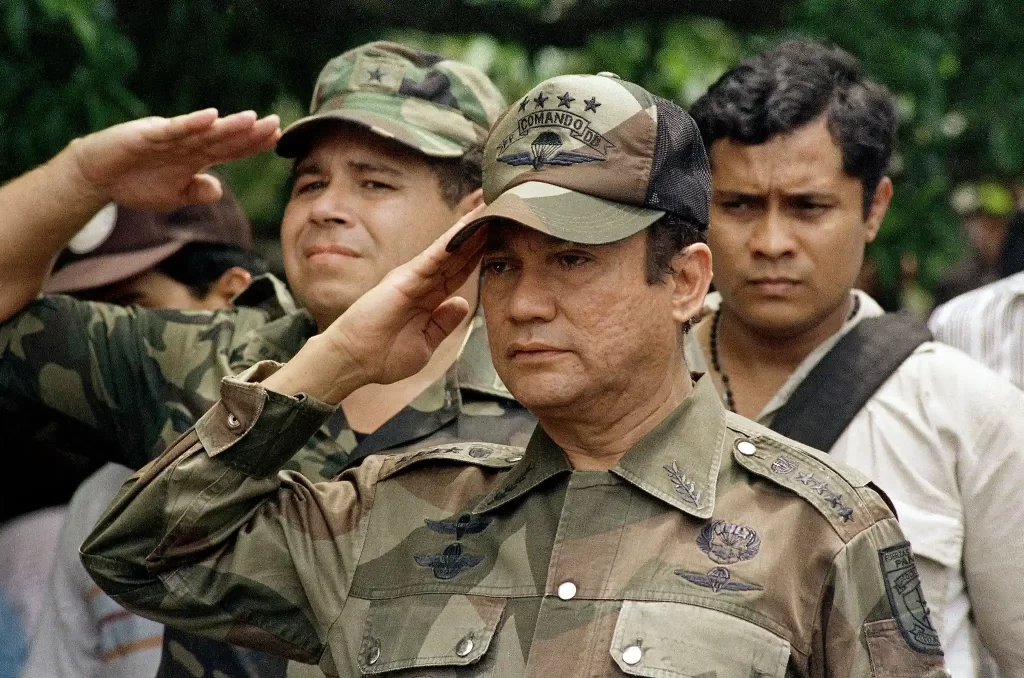
Back in 1989 we saw the culmination of two different foreign policies fully collide. For much of the Reagan 80s, Panamanian strongman Manuel Antonio Noriega was a darling of the White House and the State Department. Although he never held the title of president, he ruled through a series of proxies and essentially ran the country like a closely-held corporation. Noriega was the CEO, the board of trustees, and every single shareholder when he wanted to be. As a result of this complete control – with practically no dissension – he was able to do more or less whatever he wanted to, including helping the United States wage a covert war against Marxist guerrillas in Central America. This partnership also helped Washington back Contras as they battled the Sandinista government of Nicaragua. Aside from that partnership, Noriega practiced a hands-off approach to the Panama Canal, which is critical to Pacific-Atlantic trade. The Canal was also an important transit point for the international drug trade. And at that time, the CIA was involved to some degree in order to fund many mercenaries forces. Another fundraising effort deal with the Iran–Contra Affair, where the CIA illegally sold weapons to Iran (during the Iraq War 1980-88) to fund the Contras. Noriega turned two eyes to all of this. And that intentional naivety earned him the unconditional support of the Reagan Whitehouse.

However, when Reagan’s term ended and Bush’s terms started, the United States had different needs. The Cold War was essentially defeated. And it wasn’t just the USSR, but Central America had changed. The FSLN was expected to lose the 1990 elections, the FMLN in El Salvador was on the verge of peace, as were the guerrillas factions in Guatemala. Noriega may have been useful during Regan’s tenure, but he had also stopped following orders as closely, he chummed up with Ortega, Fidel Castro, and others that cast his loyalties into question. By the time Bush was about to take office, Noriega was less far less hand-off when it came to the Canal than years prior. His involvement with the drug cartels had also become far better known and that factor didn’t look right given America’s war on drugs and efforts like DARE! to keep kids off drugs. In any event, Reagan protected Noriega, and Bush was adamant about getting rid of him. The whole drug angle expedited the process.

The Invasion of Panama (or “Operation Just Cause”) was sold to the public as being a relatively uneventful takeover. The mainstream media went to great lengths to play down the many street skirmishes and battles that took place throughout the country. Mind you, in 1989 there was no social media, no VPN’s, and definitely no social media. People relied on newspapers, radio, and television for all of their news – all of which were closely-monitored and regulated by the government. Therefore, the American public believed that the Invasion of Panama went off without a hitch. They believed the people there welcomed the American intervention with open arms. Most Americans were clueless, even years later, that the Navy Seals were extremely busy as much as 48 hours prior to the early morning invasion getting underway. The American people had no idea how hard the Panamanian Defense Forces and Noriega’s 2000 Battalion resisted. It’s believed that the Panamanians (who traditionally trained side by side with the U.S. military) resisted in coordinated efforts for as much as 3-4 days. Sporadic resistance lasted up until the point that Noriega’s location was pinpointed at the Vatican embassy in Panama City.

If Noriega had wanted to he could have launched a guerrilla campaign against the United states. Panama had more than enough mountains (particularly the Cordillera Central) and heavily wooded areas such as the Darien Gap (in close proximity to Colombia and potential guerrilla/cartel allies). Fortunately for Operation Just Cause, Noriega was more concerned with getting out than resisting the invasion. Unfortunately for him, the Navy Seals took out his private jets. By the time the invasion happened, most if not all of Noriega’s safehouses had also been compromised. There was intel on pretty much every hideout imaginable. The longer Noriega was at large, the longer the resistance would continue.
In Cuba, Fidel Castro had something called doctrine called “La Guerra de todo El Pueblo” (or the war of the all the people). Essentially Cuban forces would not engage U.S. forces frontally during an invasion. Instead, they would break into guerrilla units alongside civilian militias throughout the countryside. The local CDR’s (Committees In Defense of the Revolution) would organize urban resistance. This doctrine was largely inspired by the Viet Cong model. It would have been especially dangerous in the late 1980’s and early 1990’s with tens of thousands of battle-ready forces returning from successful tours of duty in Angola ready to defend Cuban sovereignty.
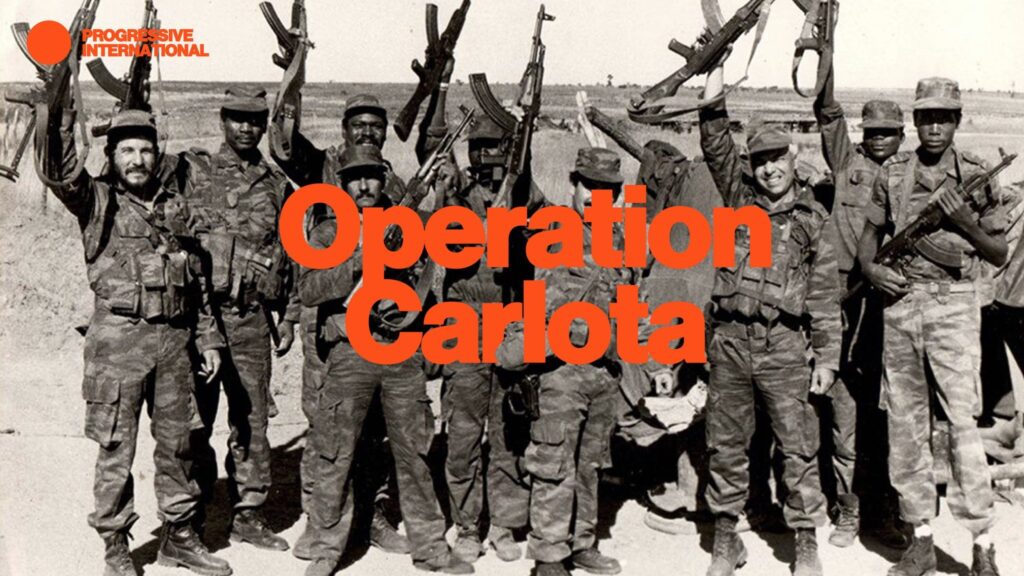
The Cubans were far more advanced than the Panamanians, with modern (for the time) fighter jets, air defenses, heavy armor and well-trained soldiers. By the late 1980’s, the Cuban military had fought throughout the Latin America (covertly), Africa (overtly), and trained fighting forces throughout the world. In fact, many historians credit the Cubans for the massive victory at Cuito Cuanavale. This marked a changing point in the war. The victory was key in securing Angola’s independence and defeating Apartheid in South Africa. The late, great Nelson Mandela recognized the key role of Cuban forces in Angola with the end of minority rule in his country. That said, it is not my goal to glamorize the FAR (Cuban Armed Forces), but their readiness and eagerness to fight was undeniable in the late 80’s. No other Latin American country had had that many engagements. These factors, as well as avoiding turmoil with the quickly-degrading Soviet Union kept Cuba safe from U.S. invasions like those of Grenada and Panama.
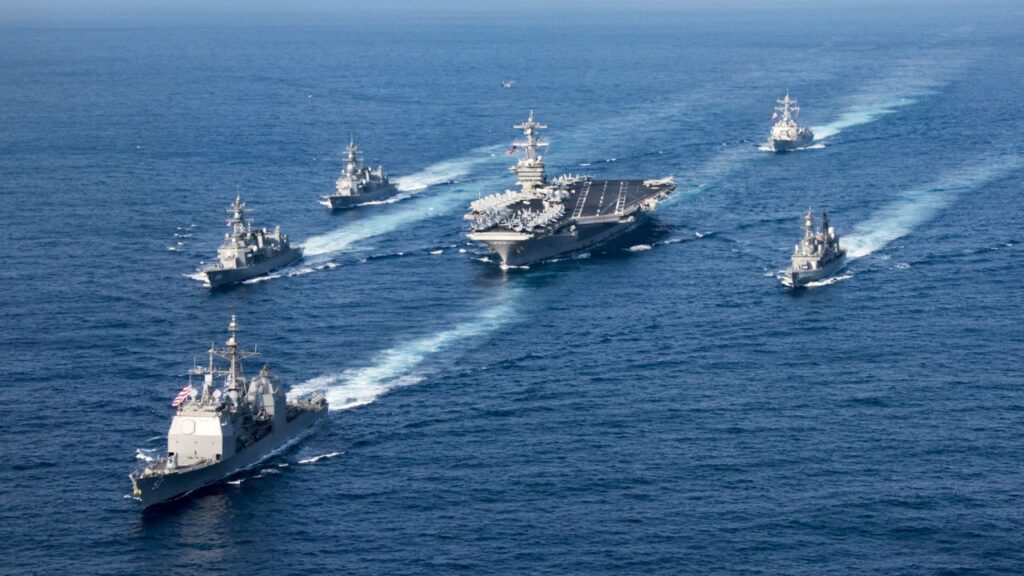
As U.S. warships amass in close proximity to Venezuelan waters, joined by French warships in their nearby protectorates, the question of regime change in Caracas is fresh on everyone’s mind. Although Maduro’s recent re-election was undoubtedly fraudulent, the idea of U.S. involvement has resulted in the expected condemnation from several Latin American nations. Something important happened following Venezuela’s latest “elections.” Many leftist president of Latin America broke with political lines and began demanding Maduro step down. This solidarity could play a role in restoring democracy in the Bolivarian Republic. The idea of foreign intervention in Latin America – namely from the United States – makes it difficult for center-of-left, progressive, and leftist leaders to stomach. They will likely return to Venezuela’s side. Quite frankly, Truman’s Monroe Doctrine may disenfranchise centrist leaders.

The diplomatic crisis with any actual involvement in Venezuela could result in condemnation from the Organization of American States (OEA), the United Nations (UN), the Arab League, the Nonaligned Nations, and then some. Such an intervention would also draw stern condemnation from Russia and the People’s Republic of China (PRC). Both superpowers sell arms to Venezuela and are considered key trading partners. Let’s not forget how much petroleum and mineral resources Venezuela is sitting on, not to mention its strategic location.

Invading a sovereign country that has the means to resist is a pretty bold move by Donald Trump. If the U.S. invades Venezuela like it did Panama, using that same approach, I fear the results may not be as favorable as contemplated. Although the U.S. has the best and most advanced military in the world, the Venezuelans are exactly mall cops, either. They have been armed and trained by the Russians, the Cubans, and the Chinese. I highly doubt these two superpowers would just sit there and watch, either. After all, China wants the U.S. to believe that their storming of Taiwan is inevitable and the Russians want to take the hardline with Ukraine. Imagine these two superpowers watching their biggest arms customer in Latin America going the way of the dinosaurs.

From a military standpoint, Venezuela would be a different type of adversary for the United States. The U.S. has attacked mostly degraded nations and battled with guerrillas. The U.S. hasn’t faced a formal enemy since WW2 or Korea. In Vietnam, the U.S. did face off with the North Vietnamese Army, but the NVA didn’t win the war. It was the Viet Cong. In the first Gulf War, Iraq was said to have the 4th largest army in the world. It had troop numbers, hundreds of fighter jets, and thousands of tanks. It was air force and air defenses were wiped out in a few week. It’s vast ground forces were annihilated in 100 hours. The Venezuelans don’t have huge troop numbers or stockpiles of archaic equipment. They have small numbers, but what they lack in size, they make up with modern weapons. Just hours ago on September 5th, 2025, two Bolivarian Air Force F-16 taunted a U.S. destroyer in international waters. The Venezuelans aren’t flying dusty MIG 21’s that belong in an air museum. They’re flying the most modern American and Russian fighters jets – and they’ve been trained on those aircrafts. The fact the Venezuelans can get that close to U.S. warships is also concerning. Even though they may be misguided and brainwashed, many Venezuelans will fight for the Maduro government.
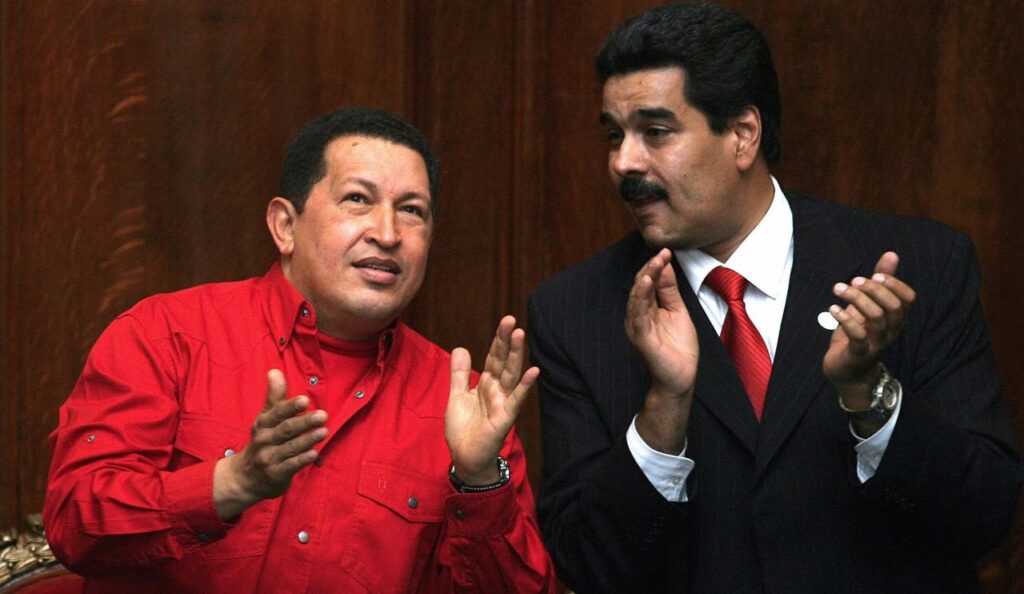
From a political standpoint, Noriega wasn’t really about anything. For most of his rule, he was simply Washington’s Central American lacky. As the the 80’s came to a close and the Bush Whitehouse was far less accommodating to him than the Reagan Whitehouse, Noriega started to pull away. If it had been any other country in the region, it wouldn’t have caused any sort of reaction. However, when Noriega started talking about the Panama Canal – he had to go. Noriega didn’t stand for much, but even still his PDF resisted. Maduro, on the other hand, is the continuation of Hugo Chavez and those who believe in Chavismo will defend the revolution. Some have been waiting 25 years for this day to come and will offer stiff resistance.
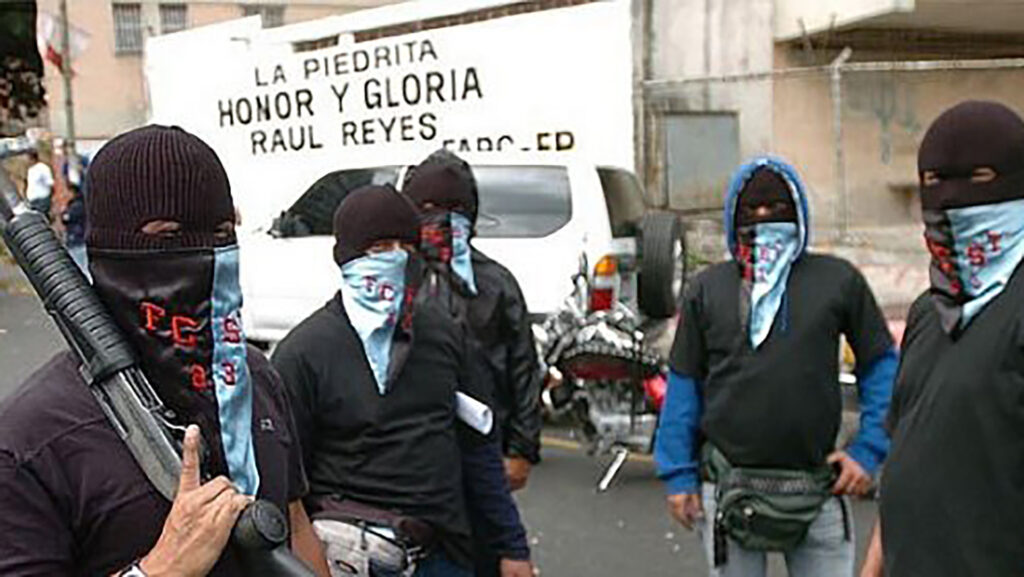
If we learned anything from our involvement in Vietnam it’s that it doesn’t matter how technologically superior an adversary may be, it doesn’t matter how many soldiers they have, how many fighter jets they have, if they face irregular forces engaged in guerrilla warfare, it drag out a conflict years, if not decades. The Viet Cong didn’t have fighter jets or tanks or artillery. all they had were Kalashnikovs and a will to resist at all costs. Who ended up winning?

The U.S. lost 58,000 dead and well over 300,000 wounded in a “police action” that denied U.S. forces and South Vietnamese proxies any significant territorial gains and live under constant attack. By 1973, the U.S. was no longer fighting the Viet Cong (VC) and the NVA. By 1975, the last U.S. helicopter left Saigon with thousands left behind stranded at the U.S. Embassy. The next day, South Vietnam ceased to exist and Vietnam unified. Although they’ve embraced market reforms, the Vietnamese still fly a red flag, today. The same red flag of Ho Chi Minh. All the warships, fighter jets, tanks and artillery couldn’t defeat the VC. They came at U.S. troops from trees, rivers, and tunnels.

The Second Gulf War was as successful as the First Gulf War, but once the occupation began, that’s when the casualties started mounting. Foreign forces operating in a sovereign land always seems to outlast their welcome – and soon. Venezuela is a major South American player. They’re not going to stand for any U.S. violation of their sovereignty. This is the problem with the Trump Whitehouse’s approach. By putting those ships and submarines so proximate to Venezuela they showed their hand and are now left sitting there with it. Military force has become the administration’s only card to play. A couple of days ago, the U.S. sank a small Venezuelan “drug boat,” killing 11 people. The Venezuelans then taunted a U.S. Destroyer. At some point, military forces will engage each other. And then what? It’s one thing to sink a speed boat but it’s another for warships to open fire on F-16 fighter jets. If they got that close, chances are they didn’t come emptyhanded.
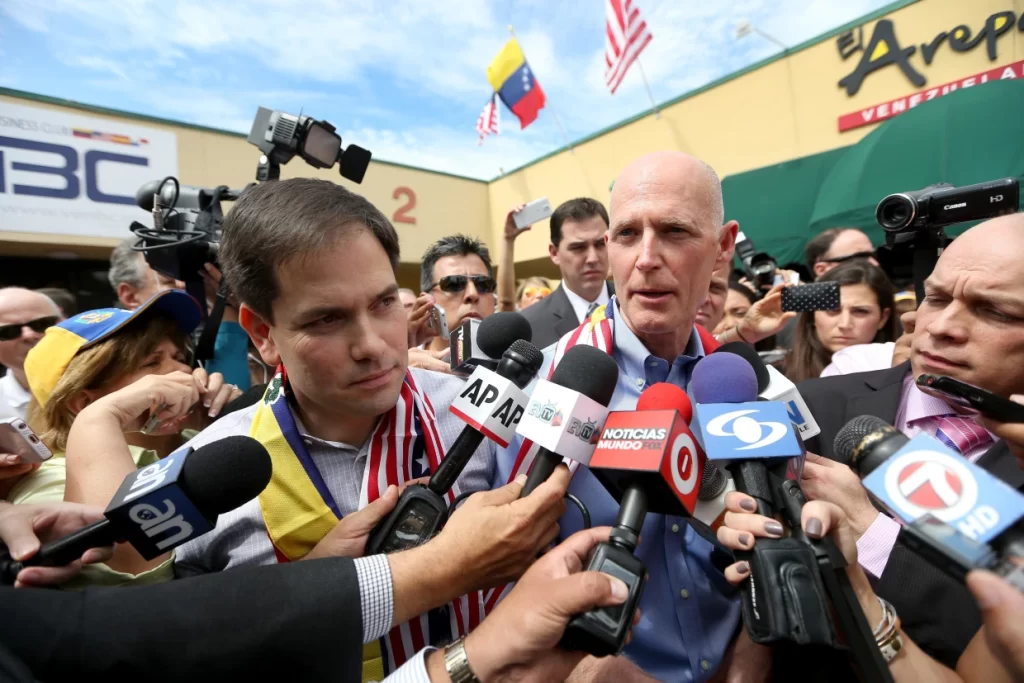
US involvement in Venezuela would be catastrophic for other reasons. If the U.S. actually tried to invade Venezuela or even if there were limited incursions, at least two Bolivarian allies would get more than likely get involved. These countries would be Cuba and Nicaragua. Their involvement might deal might have something to do with shared political values, but it would most definitely involve self-preservation as well. Secretary of State Marco Rubio hasn’t drawn much of a line between Venezuela and Cuba, or Venezuela and Nicaragua. In fact, Secretary Rubio says all three regimes represent evil in Latin America. Maybe Venezuela gets hit first, but Cuba and Nicaragua will be next.

Cuba and Nicaragua could offer assistance in a number of ways. The most glaring instance would involve manpower. Both Cuban and Nicaraguan professional soldiers or paramilitary forces are already familiar with Venezuela. Some may already be in the country as advisers, others may have served in the past. Both countries, like Venezuela, use Russian and Chinese armaments. They fly the same aircraft, operate the same armor, and share much of the same training. Although historically the Cubans and Nicaraguans had vast guerrilla training, those who fought in the revolutions that brought them to power are now either retired or died. There may still be some veterans of the Angola war in the FAR, more than likely as senior NCO’s and upper-echelon officers. That said, it’s not at all hard to believe that both regimes would send Maduro fighters. In fact, they may be currently doing so. Other forms of assistance could range from intel, to trade disruption, to even weaponizing immigration. There is no question to what ends the Nicaraguans and Cubans would go to help Venezuela. That’s something that I’m sure President Trump’s advisers have clued him in on.

If Secretary Rubio had his way, the United States would attack not one, but three sovereign countries in Latin America. That would require boots on the ground in Venezuela, Cuba, and Nicaragua. That’s patently absurd! Just saying it out louds sounds stupid. But when the Secretary of State of the United States of America says that there are three regimes in Latin America that represent an undeniable evil, what are we led to believe? And did the Whitehouse bother to qualify, clarify, or denounce Rubio’s rhetoric? No.
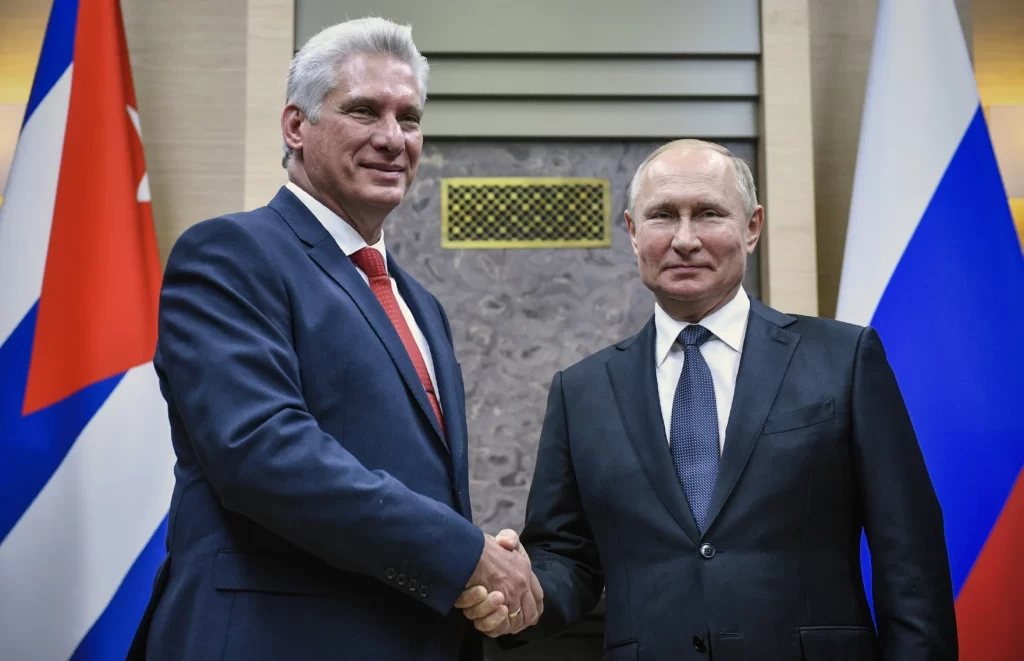
Many moons ago there was an event in history known as the Cuban Missile Crisis. This 13-day-long nuclear staring match between the United States and the Soviet Union nearly resulted in WW3. In time, a resolution was reached whereby the Soviets would remove their nukes (pointed at the U.S.) from Cuba given certain conditions were met. One of those conditions was that the United States promised to never invade Cuba. Now granted, the Soviet Union ceased to exist as of 1993, but if you think that Vladimir Putin, a former KGB operative no less, will stand back and watch U.S. forces invade Cuba – you’re out of your mind. Russia would most definitely expect the promise made in 1962 to be honored in 2025 and beyond. And for Secretary Rubio to even suggest military action against Cuba, that might elicit a response from Moscow. That response could be purely diplomatic or Putin might set the Russian navy for an extended visit to Cuba.

Only time will tell what President Trump, in his infinite wisdom, will do. That being said, Venezuela won’t be another Grenada or Panama. Hopefully it won’t be another Iraq or Vietnam, either. The hope is always for a diplomatic resolution; however, once warships and fighter jets are involved, things can easily get carried away.
